Showing posts with label Lifestyle. Show all posts

Monday, 6 February 2012

Show Me The Money

The image of Japan as a tech-driven, sci-fi wonderland is in some ways absolutely true, especially in the big cities.  Towers drenched in neon leap over you, vending machines scan your face and recommend a drink for you, and bullet trains zip you from one end of the country to the other in no time at all.

But there are just as many examples of the lesser-developed Japan that may just surprise the uninitiated.  I don't mean this in a derogatory way, but some things we may take for granted in the West are rare or even non-existent in Japan.  Radiators, for instance.  And insulation (if you hadn't guessed, I'm feeling cold right now!).  But nowhere is this more evident than with money.


Before I left the UK, I'd grown used to reaching for the plastic when paying for my goods.  Even the most tumbledown, backwater shop has a creaky card-reader they can dust off these days.  Not so in Japan.  It is still by and large a cash-driven society.  You want to buy something?  You will be paying by cash, my friend.  Only in the biggest chain stores are card payments a sure choice, but even then, if you're paying with an international card, it can be more awkward than you'd think.

It can be a real pain when ATMs are so few and far between.  A Japanese person would be shocked to see that our ATMs are out in the open, as in Japan they are all indoors, which can make looking for one harder than it should be.  And even then, you need to look out for the time and day: you could be charged for the privilege, even if it's your bank's own resident machine (as if there are little people inside who demand the extra pay for the inconvenience of working the ATM pulleys and levers on a Sunday...).  Worse still, the ATM could be closed altogether.  Therefore, you get into the habit of taking advantage of a free ATM whenever you can, so it's not uncommon to be walking around with huge wads of yen in your pocket, something you could only get away with in Japan.


In some ways, though, I kind of prefer it this way.  You feel more in control of your own finances, and you will always have a good idea of what you have in your account.  And because you never pay by card, you don't have to worry about rogue card payments you'd forgotten about suddenly plunder your balance dry.  It also encourages you to be more sensible, too, and less prone to impulse-buying.  If you go for a night-out, you'll be pegged by the money you pulled out for the occasion.


The system is inconvenient, yes, and it is steadily changing.  And it needs too: Japanese people find it WAY too easy to save and aren't spending enough to keep the economy ticking over, apparently.  Maybe removing these bottlenecks is a good start.  But, for now, I'm glad I don't have my money on tap 24/7.

Thursday, 28 July 2011

KAWAII!

Chances are, if you've even scratched the surface of Japanese culture, you've stumbled across that word.  Well, I'm here to tell you that if you live in Japan, you're practically smothered in it's cutesy, high-pitched, rainbow-coloured arms every day. If you take what 'cool' means to us Westerners, add it to 'sexy', and multiply it's prevalence by about, ooh, 50, that's how dominant kawaii-culture is in Japan.

It's everywhere, even in all the mundane everyday things like roadblocks (see below) helped in no small way to the fact that 'cute' doesn't hold the same infantile stigma as it does in western countries. The Tokyo Metro uses the mascot of two cartoon raccoons. Their military had cute mascots for their recruiment plan. Police boxes have kawaii characters. Practically everything advertised on TV is accompanied by jingle sung by a cute kid, along with just as many talking animals.

And this is just fringe material we're talking about here. Take a step into mainstream consumer Japan and the kawaii-level steps up about twenty gears. There's nowhere you can turn without bumping into Hello Kitty merchandise of some kind. and if it's not that, then you're probably being bombarded by another of the Cute Crew; doraemon, pokemon, stitch, the disney gang, and a whole host of doe-eyed, unreasonably proportioned manga characters.


The Japanese lap it up, and it shows no signs of slowing down. Of course, many of the franchises mentioned above and more export around the world to great success, but there's no doubt that 'kawaii' rules the roost in it's native Japan.  Kawaii is more than just an adjective here: it's a way of life.

The question is: why? Why should Japan of all places, with such a feudal, mythically dense past give itself over so readily to the over-saturated invasion of cute? There's been much debate about this, both positive and negative. See, the Japanese are by nature group-orientated people, and value conscensual harmony over their own individual desires. Kawaii-characters are, by nature, non-threatening and non-assertive, and instead win you over with an onslaught of benevolence and sweetness, something that appeals to the national psyche greatly.

But this doesn't answer the question: as said, how did it jump from samurai and bushido to technicolour aborableness? One argument is that it's down to the Second World War, an era recalled by the older generation as 'the black nightmare'.  Their defeat brought a great deal of self-inflicted shame of their actions, the horror made further entrenched by the bombings. As such, there was a feverish repositioning of Japan as a (and I repeat) non-threatening, benevolent force on the world stage, that wins you over without resorting to aggression. The scars of Hiroshima and Nagasaki gave birth to the kawaii-culture, as an innocent-faced plea for peace. Of course, this is merely a theory, but I have to admit it's a fascinating one (another theory is that post-bomb Japan, followed by American occupation, has forever been left in the role of the USA's emasculated little brother).

Well, that is all in the past.  Whatever the origins of kawaii-culture, it has now moved well beyond that, and for the younger generations it is all part of the fabric of their lifestyle, just as much as festivals, school and driving on the left is: you don't question it, it just is.


The U.S. Japan-Alliance explained - in manga style, of course.
In my humble opinion, there are upsides and downsides to the kawaii-culture.  There's no denying that it's sweet and endearing, and on the whole it's a lifestyle that I find far more attractive and appealing than the aggressive, pseudo-intimidating style that Westerners generally prefer.  It's also quite liberating: it's perfectly alright for adults to talk freely about anime and enjoy things that seem otherwise childish or feminine in the West; in the UK or USA, the overbearing need to seem masculine (for guys, at least) often ringfences topics into cars and hot girls: anything beyond that will stigmatise you.  Okay, I'm generalising, but you get the idea.

'Purikura' photo booths actually enlarge your eyes!
The trouble I have with kawaii-culture is just how dominating it is here in Japan, to the point it can be suffocating, and stamps out other aspects and ideas.  For example, the over-powering demand for girls to be cute (not sexy, cool or any other aspect of their own personality) sees them donning frilly doll-house dresses, big ribbons in their hair, dangle a huge mass of furry characters from their phones and put on a squeaky voice.  They will submit to the aspects of cute - submissive, non-aggressive, sometimes deliberately air-headed too - simply because it's desirable, and like I said before, they won't question it, because that's the way it is in Japan.  And I've often heard squeals of 'Kowai!' (scary - a word ironically close in sound to kawaii), at something that isn't actually scary at all, but just not cute.  Which sums up the downsides nicely: cuteness is the holy grail, everything else is yucky.  And in Japan, if you're out of the group, you're a nobody.

Whatever you think, though, kawaii is here to stay, and will be a keyword in 21st century Japan as much as Meiji was in the 19th century.  For better or for worse, we'll have to wait and see...

Thursday, 21 July 2011

"Why did you come to Japan?"

As a foreign resident in Japan, I'm often asked this. The answer is both simple and complicated: put simply, I love Japan.

Sigh, I hear you, er, sigh. A blogger confessing their love for the country they're in. What else is new? Well, maybe nothing, but the thing is, I have no idea WHY I love Japan so much, and I fear it might be a slightly masochistic love affair. And this is where it get's complicated, folks.


Firstly, Japan isn't really a conventional country to 'escape' to, is it? True, their impact on pop culture and modern life can't be denied: from Sony to Nintendo; Nissan to Kodak; Manga to Anime: these are words anyone with even half a finger on the pulse of today's world will recognise. But these are things you can experience and absorb quite happily in your own country, as authentic or not as you please, with the peace of mind that when you step out of the door that the signs are still in a language you know. You don't really need to move to Japan to immerse yourself in an Otaku lifestyle, not really.

So no, Japan isn't an 'escape' country. For the most part, Japan is a working, modern and often stressful place to live, and more often than not it resembles every other first world country out there. And let's get one thing straight; for all of it's much vaunted advancements and trumped cleverness, Japan is not the uber-space-age-techno-land you might expect. Oh sure, there are great dollops of fantastic neon-lit futurism to be savoured, no doubt, yet for all of it's dynanism, Japan can be frustratingly backward and slow-moving in other respects. Those used to going light and paying with everything by plastic will be shocked to find that Japan is still a cash-heavy culture, and TV ads are only just starting to push ATMs like they are new things.

And for all the complaints we might level at the quality of our own television, you'll be sorely missing them when you witness Japanese TV: garish game-shows, cheesy daytime TV dramas and SO! MANY! ADVERTS! (Sometimes entire shows are just whole adverts for products - a critique that could be levelled at our own TV sometimes but in Japan it's so in-your-face it actually causes a headache).

How about the traditional Japan, then? True, their history and culture is enigmatic and deep, and I love exploring temple sites and shinto shrines. But again, this is holiday material. You don't move to a country for the history, because annoying functional necessities like buying the milk get in the way.

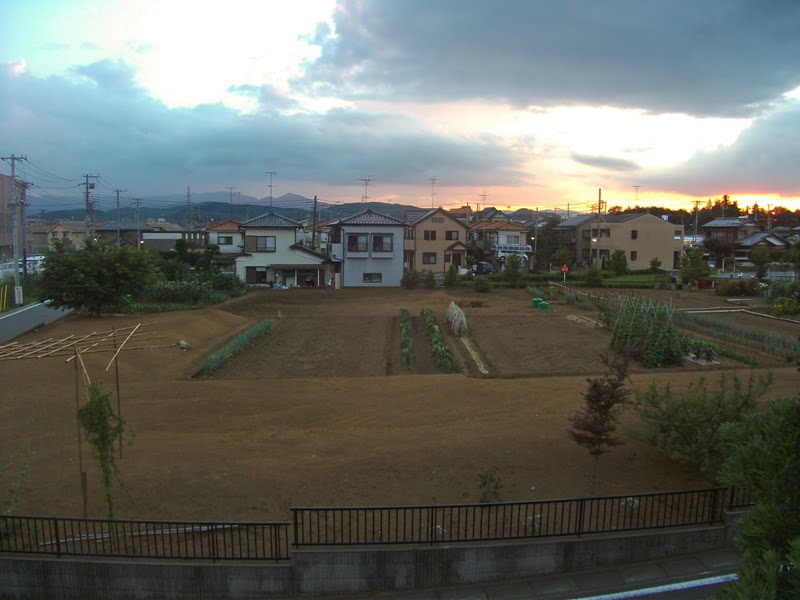
Japan isn't even really an especially pretty country. Oh sure, the national parks and mountains are beautiful (aren't they always?), and the night-time bright lights of the big cities hold their own appeal, but the majority of urban Japan is surprisingly scruffy: the lack of wire-grounding means that telephone poles are often choked with wires that web thickly overhead, often ruining views, and when looking out from a train window at a suburb, it may just surprise you just how strikingly similar some of the tightly-packed houses look to a shanty town (they're not, of course, but on first glance it may take you back).

And yet...yet...despite ALL this, despite all of the frustrations, contradictions and everything else, in Japan it all works. Somehow, all of these ill-fitting pieces come together to form a truly alluring, unique mosaic of culture and society that I just couldn't (and still can't) describe in mere words. Returning home from the eye-burning experience of Akihabara, with it's neck-straining heights and endless floors of electronic delights and stomach-churning colour clashes as capitalism rides high, to return to the quiet back streets, quaint and old-fashioned somehow yet clean and entirely modern, to slip off your shoes as you enter and watch from the back door as birds rest on the reams of overhead wires and children make their way home in their strange uniforms, to when the sun sets and Japan lights up like a beacon from space, knowing the night's entertainment, whether out and about or at home in front of the box, is brainless and daft but a light and undemanding way to unwind after the long days many work. This, and everything else, is all at work in everyday life, new and old, forward-facing and backward-looking, sophisticated and intelligent yet childlike and MASSIVE on kawaii-culture (more on this some other time)...Japan presents itself from many angles at once, and it's contradictions make it a fascinating place.


When the Japanese talk about their own uniqueness as a race there's more than a shade of arrogance and naivety to it, but I'll tell you what, there's a fair chunk of truth to it too. Like all the best love attractions, I guess, you have no idea why you love it, you just do, for many reasons and yet no real reason at all.

So this is the aim of my blog, 'Breaking Japan'. To try and make sense of this confounding, enigmatic country, and report it back. All of it: the good, the bad, and the downright bizarre.